




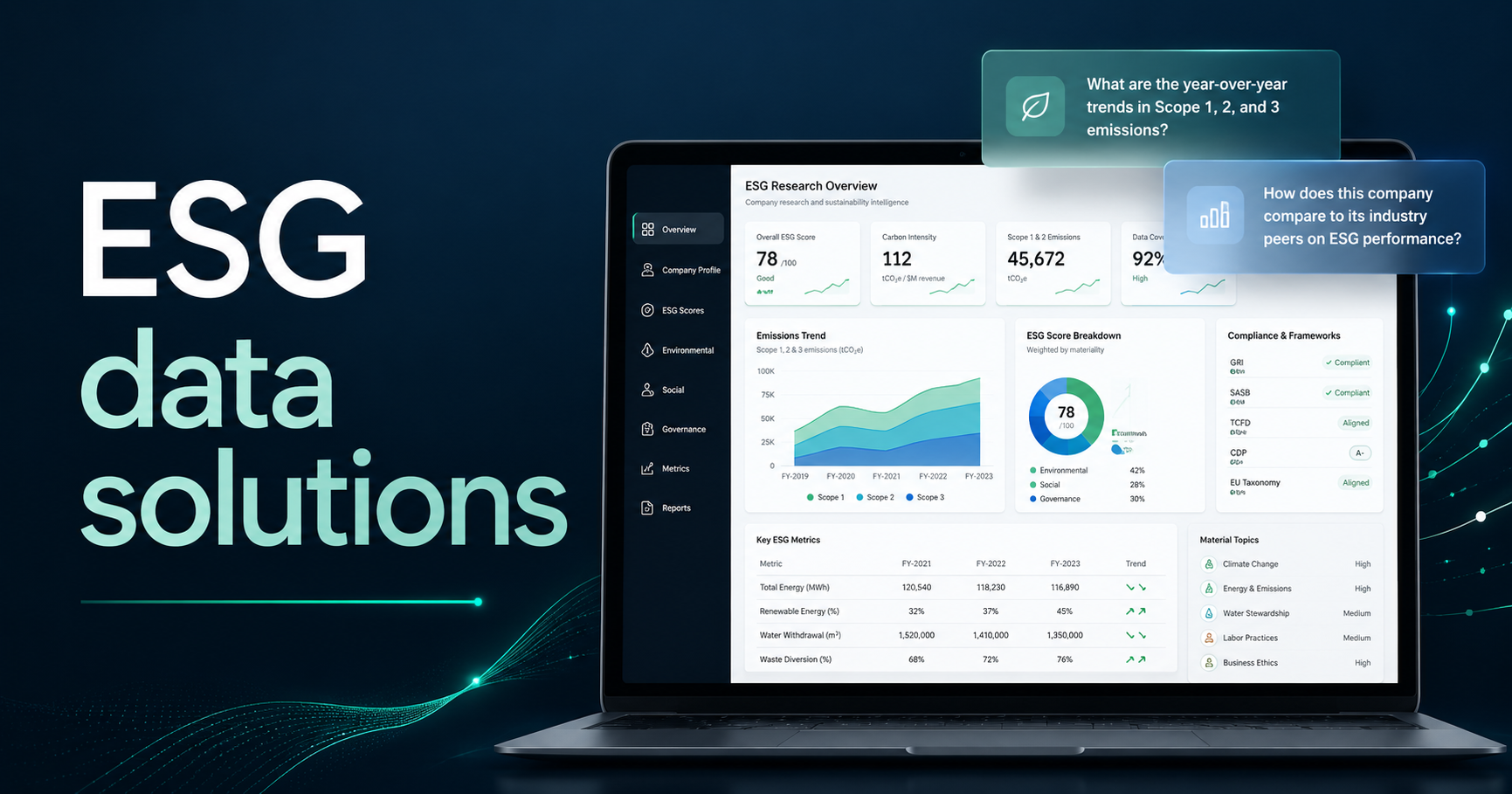
Sustainability reporting has become a critical business priority for organizations operating in increasingly regulated and transparency-driven markets. Investors, regulators, consumers, and stakeholders now expect companies to provide credible environmental and governance disclosures supported by trustworthy evidence. As reporting expectations continue to evolve, businesses need better ways to validate information, monitor compliance requirements, and analyze sustainability performance with confidence.
Table of Contents
- Why Source Verification Matters in Sustainability Research
- How an Intelligent Research System Improves Sustainability Analysis
- The Growing Demand for ESG Data Solutions
- Key Features Businesses Should Look for in a Research Platform
- Building Trust Through Verified Sustainability Intelligence
- The Future of AI-Powered Sustainability Research
- Conclusion
An advanced ESGSure demonstrates how technology-driven research systems are reshaping the way organizations manage sustainability intelligence. A modern ESG research platform enables companies to access verified information, streamline research workflows, and reduce the risks associated with inaccurate or incomplete reporting.
The growing volume of sustainability disclosures, regulatory frameworks, and public datasets has made manual research increasingly inefficient. Organizations are now turning to intelligent digital systems that combine automation, verification, and analytics to improve operational efficiency and decision-making quality.
Why Source Verification Matters in Sustainability Research
Reliable sustainability reporting depends on the quality and traceability of underlying information. Businesses often collect data from multiple sources, including corporate reports, government databases, regulatory filings, and industry publications. Without proper verification, inconsistencies and misinformation can affect reporting accuracy and stakeholder trust.
A source-verified research framework improves transparency by connecting insights directly to authenticated references. This process helps organizations maintain stronger compliance standards while supporting better governance practices. Companies that prioritize verified sustainability intelligence are also better positioned to manage reputational risk and strengthen investor confidence.
Modern research systems reduce dependence on fragmented spreadsheets and manual validation processes. Instead, organizations can centralize research workflows within a structured environment that supports traceability, documentation, and audit readiness.
How an Intelligent Research System Improves Sustainability Analysis
AI-Driven Data Collection and Verification
An advanced ESG AI platform uses automation and machine learning capabilities to organize large volumes of sustainability-related information from trusted sources. Instead of spending hours manually reviewing reports, analysts can identify meaningful insights more efficiently through automated extraction and categorization.
Artificial intelligence also supports verification by identifying inconsistencies, duplicate references, and missing disclosures. This allows organizations to maintain higher research accuracy while improving reporting speed and operational productivity.
Centralized Sustainability Intelligence
Businesses often struggle with disconnected datasets spread across multiple departments and systems. A centralized sustainability intelligence environment enables teams to collaborate more effectively while maintaining consistency across reporting initiatives.
Integrated dashboards and structured data management systems improve visibility into sustainability performance metrics, governance indicators, and regulatory obligations. This unified approach supports stronger strategic planning and long-term sustainability initiatives.
Improved Decision-Making Through Verified Insights
Reliable sustainability intelligence supports better business decisions across investment analysis, supply chain management, risk evaluation, and corporate governance. Executives and compliance teams benefit from having access to traceable information supported by validated references.
A trusted ESG Research tool also helps organizations respond more effectively to stakeholder requests, reporting audits, and evolving disclosure requirements. Access to accurate research can significantly reduce operational uncertainty while supporting long-term organizational resilience.
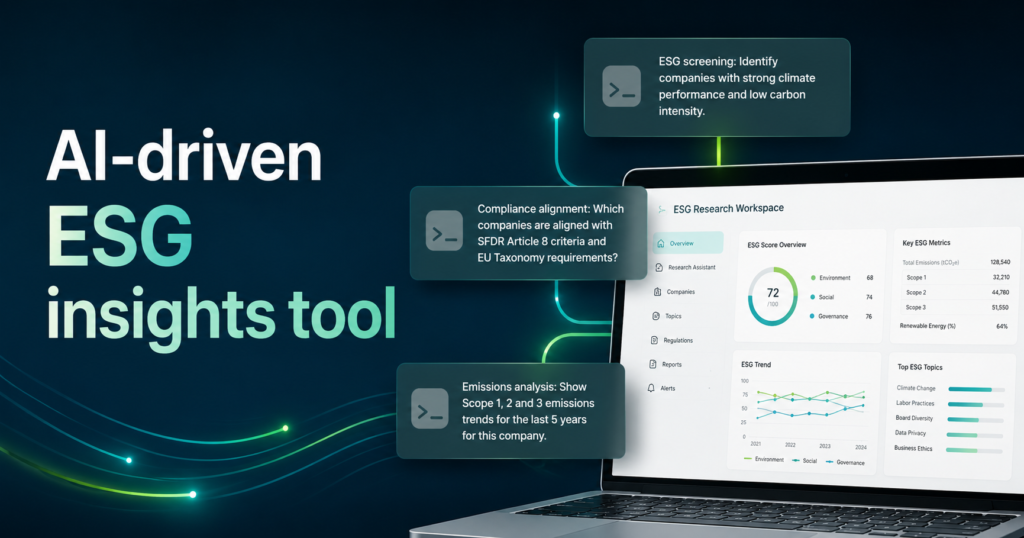
The Growing Demand for ESG Data Solutions
Global sustainability regulations continue to expand across industries and regions. Businesses are increasingly required to disclose climate-related risks, emissions performance, diversity metrics, and governance practices. These evolving requirements are driving demand for scalable ESG data solutions capable of supporting both compliance and strategic analysis.
Organizations are also facing increasing scrutiny from investors seeking transparent sustainability reporting backed by verifiable evidence. Data quality, consistency, and auditability have become central components of modern corporate governance strategies.
Technology-driven sustainability platforms help businesses adapt to these changes by improving data accessibility, reducing research complexity, and supporting standardized reporting frameworks. As sustainability reporting becomes more sophisticated, intelligent verification systems are expected to play an even greater role in corporate decision-making.
Key Features Businesses Should Look for in a Research Platform
Source Transparency and Audit Readiness
A reliable platform should provide direct traceability to original references and disclosures. Transparent sourcing strengthens accountability while improving confidence in sustainability reporting outcomes.
Automated Research Workflows
Automation capabilities reduce manual effort and accelerate analysis processes. Intelligent workflows help organizations process large datasets more efficiently while minimizing human error.
Regulatory Monitoring Capabilities
Businesses operating across multiple jurisdictions require visibility into changing sustainability regulations and disclosure standards. Monitoring tools can help organizations stay informed about compliance updates and reporting obligations.
Scalable Analytics Infrastructure
As sustainability data volumes continue to grow, organizations need scalable systems capable of supporting advanced analytics, benchmarking, and performance tracking across multiple business units.
Building Trust Through Verified Sustainability Intelligence
Trust has become one of the most valuable assets in corporate sustainability reporting. Stakeholders increasingly expect organizations to provide transparent evidence supporting environmental and governance claims. Companies that rely on inaccurate or poorly documented information risk damaging both reputation and investor confidence.
An effective ESG research platform helps organizations build trust through verifiable research processes, consistent data management, and reliable analytical capabilities. By improving transparency and accountability, businesses can strengthen stakeholder relationships while supporting long-term sustainability objectives.
Source verification also contributes to stronger governance structures by encouraging standardized documentation practices and better internal oversight. As reporting frameworks continue to evolve, businesses that invest in verified sustainability intelligence will likely gain a competitive advantage in increasingly data-driven markets.
The Future of AI-Powered Sustainability Research
The future of sustainability intelligence will likely be shaped by automation, predictive analytics, and real-time verification technologies. Organizations are moving beyond static reporting processes toward dynamic systems capable of delivering continuous sustainability insights.
An advanced ESG Research tool powered by intelligent automation can help organizations identify emerging risks, monitor evolving regulations, and improve long-term strategic planning. Future innovations may also support deeper integration between sustainability analysis, financial performance metrics, and enterprise risk management systems.
As businesses continue to prioritize transparency and accountability, intelligent sustainability research systems will become increasingly important for maintaining compliance, operational resilience, and stakeholder trust.
Frequently Asked Questions
What is a source-verified sustainability research system?
A source-verified sustainability research system is a digital platform that collects, organizes, and validates sustainability-related information from trusted references. It helps businesses improve reporting accuracy and maintain transparent documentation practices.
How does an ESG AI platform improve reporting accuracy?
Artificial intelligence improves reporting accuracy by automating data collection, identifying inconsistencies, and validating information against trusted sources. This reduces manual research errors and improves efficiency.
Why are verified sustainability insights important for businesses?
Verified insights support better decision-making, stronger compliance processes, improved stakeholder trust, and reduced reputational risk. Accurate reporting is increasingly important for investors and regulators.
What industries benefit from ESG data solutions?
Industries including finance, manufacturing, healthcare, energy, technology, and supply chain management can benefit from structured sustainability intelligence and compliance-focused research systems.
Can an ESG research platform support regulatory compliance?
Yes. Many research systems provide monitoring capabilities, reporting support, and traceable documentation that help organizations align with evolving sustainability regulations and disclosure standards.
Conclusion
The growing complexity of sustainability reporting requires businesses to adopt more reliable and transparent research practices. Intelligent verification systems are helping organizations improve data quality, streamline reporting workflows, and strengthen stakeholder confidence through trustworthy sustainability intelligence.
By combining automation, traceable sourcing, and analytical capabilities, modern ESG data solutions provide organizations with the tools needed to navigate evolving compliance requirements and support informed business decisions. As sustainability expectations continue to rise, businesses that invest in verified research infrastructure will be better positioned to build trust, improve accountability, and maintain long-term resilience.
Organizations aiming to strengthen sustainability reporting and improve research transparency should consider adopting advanced platforms built for verified intelligence and compliance readiness. Businesses looking to improve reporting accuracy, streamline analysis workflows, and build stakeholder confidence can reach out to us to explore smarter sustainability research solutions designed for modern regulatory and operational demands.